A tankless water heater works in most Mesa homes, but the city treats converting a gas tank to a gas tankless unit differently from a straight swap: the conversion needs a permit. Mesa's hard water and its split between City of Mesa gas and Southwest Gas also shape the plan. Call the number on this page to be connected with a local plumber in Mesa.
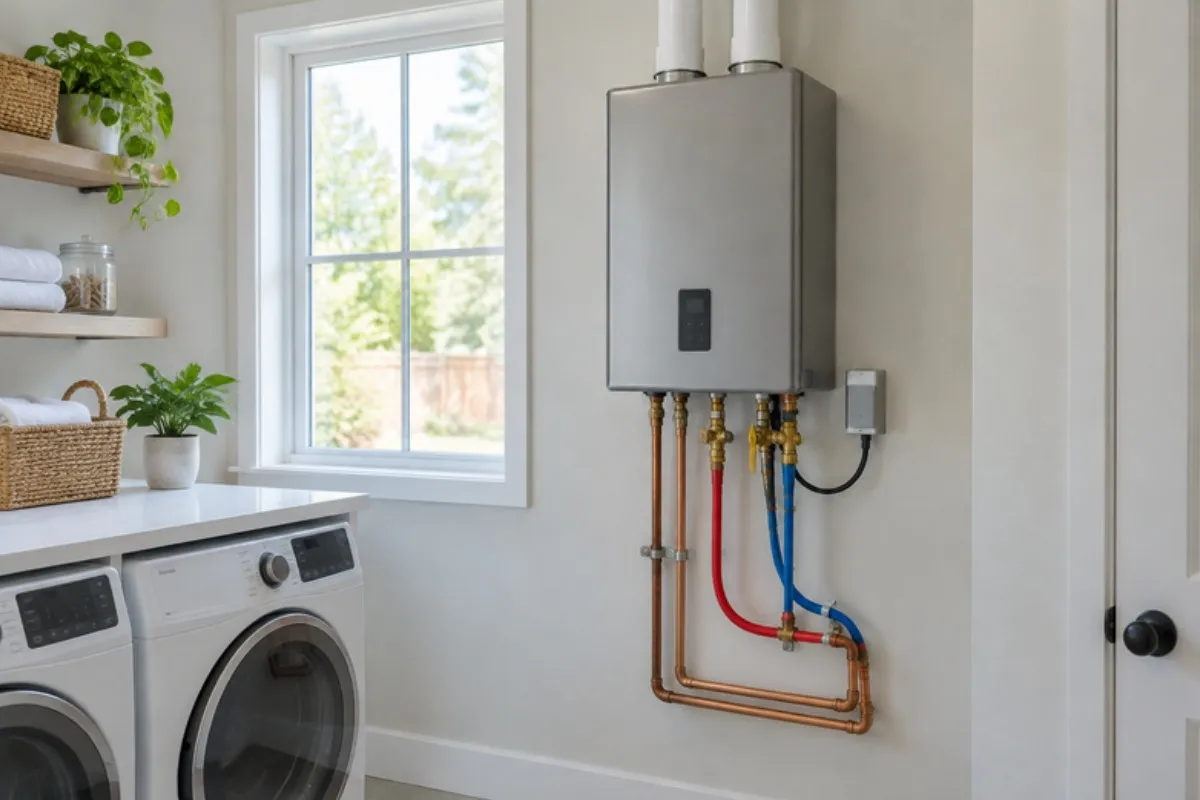
Signs a tankless unit is worth a look
- Your tank is near the end of its life and the garage floor around it stays damp
- Showers turn lukewarm once the second or third person in the house gets in
- You want back the floor space a 40- or 50-gallon tank takes up
- An existing tankless unit flashes error codes or shuts down when two fixtures run
- Hot water flow has tapered off over a year or two, often a sign of scale in the heat exchanger
What Mesa water and gas mean for the install
Mesa Water Resources blends Colorado River water from the Central Arizona Project, Salt and Verde River water from SRP, and groundwater from city wells, and which surface supply reaches you depends on your water zone. The city's water quality report puts average hardness near 12 grains per gallon in the City Zone and about 16 in the Eastern and Southern Zones. Water that hard leaves scale fastest wherever it is heated, and in a tankless unit that means the narrow heat exchanger. Plan on isolation valves for flushing and talk through whether a softener makes sense for your zone.
Gas is the other Mesa wrinkle. The City of Mesa runs its own gas utility across most of the city and Southwest Gas serves the rest, so the right utility depends on your address. The city requires the serving gas utility to be notified before gas appliances go into service. With a median build year around 1988, many Mesa houses have a tank in the garage on a gas line sized for that tank, not for a tankless burner at full fire.
What affects the cost
- Gas pipe sizing. A larger line from the meter is common once burner input climbs.
- Venting. Gas units need their own vent; a short run through a garage wall is simpler than a route through the attic.
- Electrical. Gas tankless units need an outlet for controls; electric whole-house units can require a panel upgrade.
- Permit. Mesa requires one to convert a storage gas heater to tankless gas, while a like-for-like tank replacement of equal or lesser rating doesn't need one.
- Scale protection. A softener or scale-control cartridge adds to the first cost but protects the heat exchanger.
What happens when you call
You'll be connected with an independent plumber who works in Mesa. Have your current heater's fuel type and size, the number of bathrooms and a rough sense of peak use ready. The plumber typically handles the permit through Development Services Permit Services (480-644-4273). If you ever smell gas, leave the house first. Then, from outside, call 911 and City of Mesa gas at 480-644-4277, or Southwest Gas at 877-860-6020 if that utility serves your address.
Tankless Water Heaters questions in Mesa
Do I need a permit to switch from a tank to a tankless water heater?
How often does a tankless heater need descaling in hard water?
Will my existing gas line feed a whole-house tankless heater?
Who do I call if I smell gas near the water heater?
More plumbing services in Mesa
Tankless Water Heaters nearby
Helpful guides
Sources
Last updated: