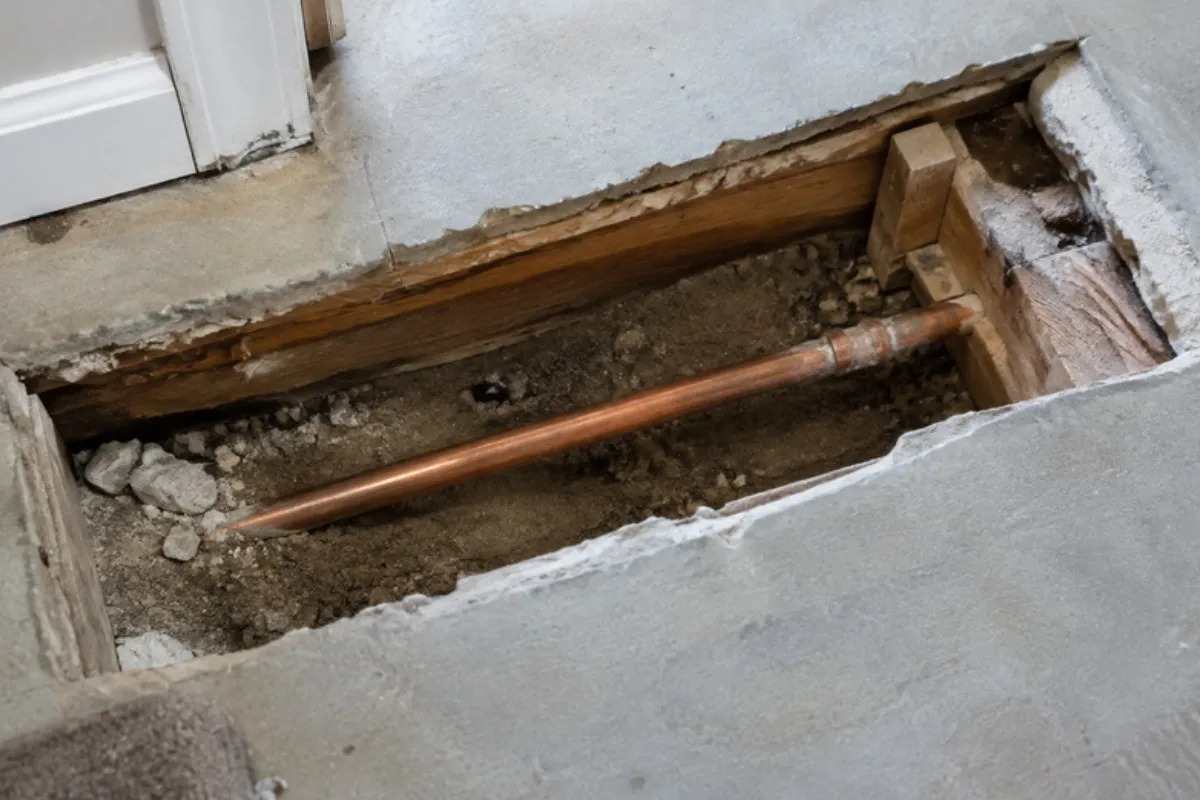
A slab leak is water escaping from a supply line buried in or beneath the concrete floor of a house. Repair means locating the break precisely, then either opening the floor at that spot or rerouting the line so the old run is abandoned. Call the number on this page to be connected with a local plumber in Phoenix.
Why this is a Valley problem
Basements are rare here. Most homes are slab-on-grade, which means hot and cold lines often run through or under the concrete before they come up at fixtures. A pinhole in that pipe can leak for weeks without showing on a wall. Pipe rubbing against concrete or gravel, a joint that was strained when the slab was poured, and ordinary corrosion in older copper are the usual causes. With a median year built of about 1984, a large share of Phoenix housing has had decades for those small weak points to show up.
Clues people notice first
- A spot on tile or concrete that is warm to bare feet, often near a hot water line
- The water heater running when no one is using hot water
- Sound of moving water with every tap closed
- Damp carpet edges, lifting wood floors or a musty smell near a wall
- A City of Phoenix water bill that rises without a change in use
Narrow it down before you call
Shut off irrigation, the pool fill valve, the ice maker and every faucet. Look at the meter in the box near the street. If the small leak dial is still turning, close the house shutoff. When the dial stops, the leak is inside the home and a slab leak is a real possibility. When it keeps going, the buried line between the meter and the house is the more likely suspect; property owners maintain that line under the City's rules, and it is covered on our water line repair page.
How the leak gets pinned down
A plumber usually pressure-tests the hot and cold sides separately to learn which one is losing water. Electronic listening equipment then picks up the leak noise through the floor, and a thermal camera can trace the warm path of a hot line. A tight locate keeps the opening small.
Three ways to fix it
| Approach | Fits when | Trade-off |
|---|---|---|
| Spot repair through the slab | One leak in pipe that is otherwise sound | Floor covering and concrete are cut, then patched |
| Reroute through attic or walls | The buried run is likely to leak again | Drywall patches instead of floor work; attic lines need insulation against summer heat |
| Repipe the affected area | Repeat leaks or aging pipe throughout | Larger job that removes future weak spots |
What moves the cost
Time spent locating, the type of flooring over the leak, which repair you choose and any drying or flooring work afterward all affect the total. Ask whether a City of Phoenix permit is needed and who pulls it.
Slab Leak Repair questions from Phoenix homeowners
Are slab leaks common in Phoenix?
Is a reroute better than breaking up the floor?
Does a hot spot on the floor always mean a slab leak?
Who pays for a leak between the meter and the house?
Related plumbing services in Phoenix
Helpful guides
Slab Leak Repair in nearby cities and towns
Maricopa County
Pinal County
Sources
Last updated: